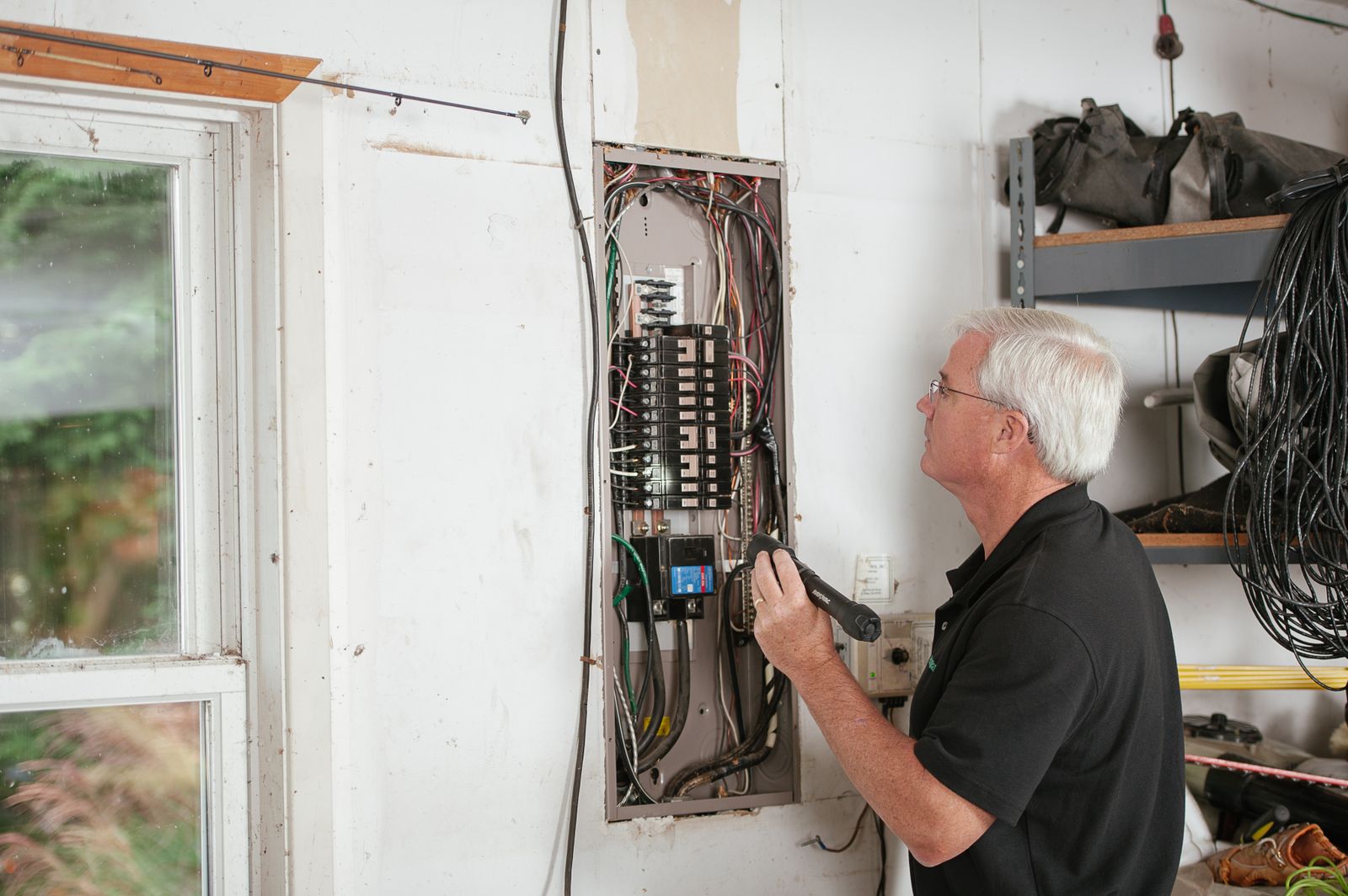
Lights dim when the dryer kicks on. You reset the same breaker again and again. Older homes around here were wired for a fraction of what a house pulls today. You may not even need 200 amps, and we will tell you straight if you don't.
Want us to come take a look? (716) 510-4227
Most homes around here were built in the postwar decades and wired for a fraction of what a house pulls today.
Add central air, an EV charger, a hot tub, or a finished basement, and a 100-amp panel gets pushed past what it can safely carry. Some homes are still on an old 60-amp fuse box, which is even further behind.
You do not see amps. You see the signs. Lights that dim when the dryer or the AC kicks on. Breakers you reset all the time. A panel that feels warm to the touch, or has a faint burning smell near it. Not enough room for one more circuit, so an extension cord ends up doing a job it was never meant to do.
None of that is the appliance's fault. It is the service feeding the house. When the panel cannot keep up, the wiring behind your walls runs hotter than it should, and that is where the real risk is.
The dryer or the AC starts and the lights dip. You reset the same breaker over and over. The panel is out of room to give.
A panel that is warm to the touch or smells faintly of burning is a panel working harder than it safely should. That is worth a look now.
An EV charger, a heat pump, a hot tub, or a shop in the garage. A 100-amp service may not have the headroom for what you are about to plug in.
Plenty of homeowners get talked into a bigger service than their house will ever use. We would rather do the math than sell you an upgrade.
A load calculation adds up what your home actually draws and what you are planning to add. It tells us, in plain numbers, whether 100 amps is fine or whether you are genuinely out of headroom. If your 100-amp service is safe and you are not adding a big load, we will tell you to keep it. That is the end of it. No charge, no pitch.
If the calc shows you are short, you will see exactly why, and you will know before you commit to anything. You never upgrade on a hunch, and you never upgrade because someone wanted the bigger ticket.
When we replace the panel, the whole service is brought up to the code in effect here. That includes whole-house surge protection that older homes never had, and an outdoor emergency disconnect when the meter and service wires are being replaced, so the fire department can cut power fast from outside. That is the reason to plan a full upgrade as one job instead of paying to open it up twice.
A permit is required, and a licensed electrician pulls it. An independent New York inspector signs off the finished work, not just us. You get the paperwork for your file and your insurance.
If it turns out your panel is a Federal Pacific or Zinsco panel, that changes the picture, and we will walk you through why. When you are ready for the number, here is what a 200-amp panel upgrade costs around here and what moves the price.
These are honest estimates for around here so you are not walking in blind. Your exact number comes from the free look, and once you have it, the quote is the price.
| Scenario | Typical installed (WNY) |
|---|---|
| Straightforward 100 to 200 amp panel and service swap | $2,000 to $3,500 |
| With a new meter pan, mast, service entrance, or outdoor disconnect | $3,500 to $5,800+ |
| The outdoor emergency disconnect by itself | $250 to $450 |
The jump to the higher band comes from the full service-entrance work, the meter, the mast, and the utility cutover, not the disconnect alone. Northeast labor runs above the national average, so treat national calculators as a floor. For the full breakdown, see the 200-amp panel upgrade cost page.
We come out and run the load calculation on your home. It tells us whether your panel has room or whether you are genuinely out of headroom. Either you need the upgrade or you don't, and you will hear it straight.
If 100 amps is fine, that is what we will say, and that is the end of it. No charge, no pitch. We will not talk you into a service you don't need.
If it does need upgrading, you get one price, up front, and that is what you pay. If we run into something inside the wall, we stop and check with you first. No surprise bills. Done to code and inspected, and your paperwork is handled. Most upgrades are a one-day job, with the power off for about four to eight hours, not weeks.
The math decides, so you only upgrade if you actually need the capacity.
An independent New York inspector signs it off. You get the certificate for your insurance.
Whole-house surge protection and the required outdoor disconnect, done once.
You approve the number before anything happens, and you never pay for work you didn't sign off on. If something inside the wall changes the scope, we stop and talk to you first. You decide. That is the whole promise.
Not sure we cover your town? See the areas we serve across Cheektowaga and the Buffalo suburbs.
Tell us what your panel is doing. We will run the load calc and tell you straight whether you need the upgrade, with one honest price if you do.