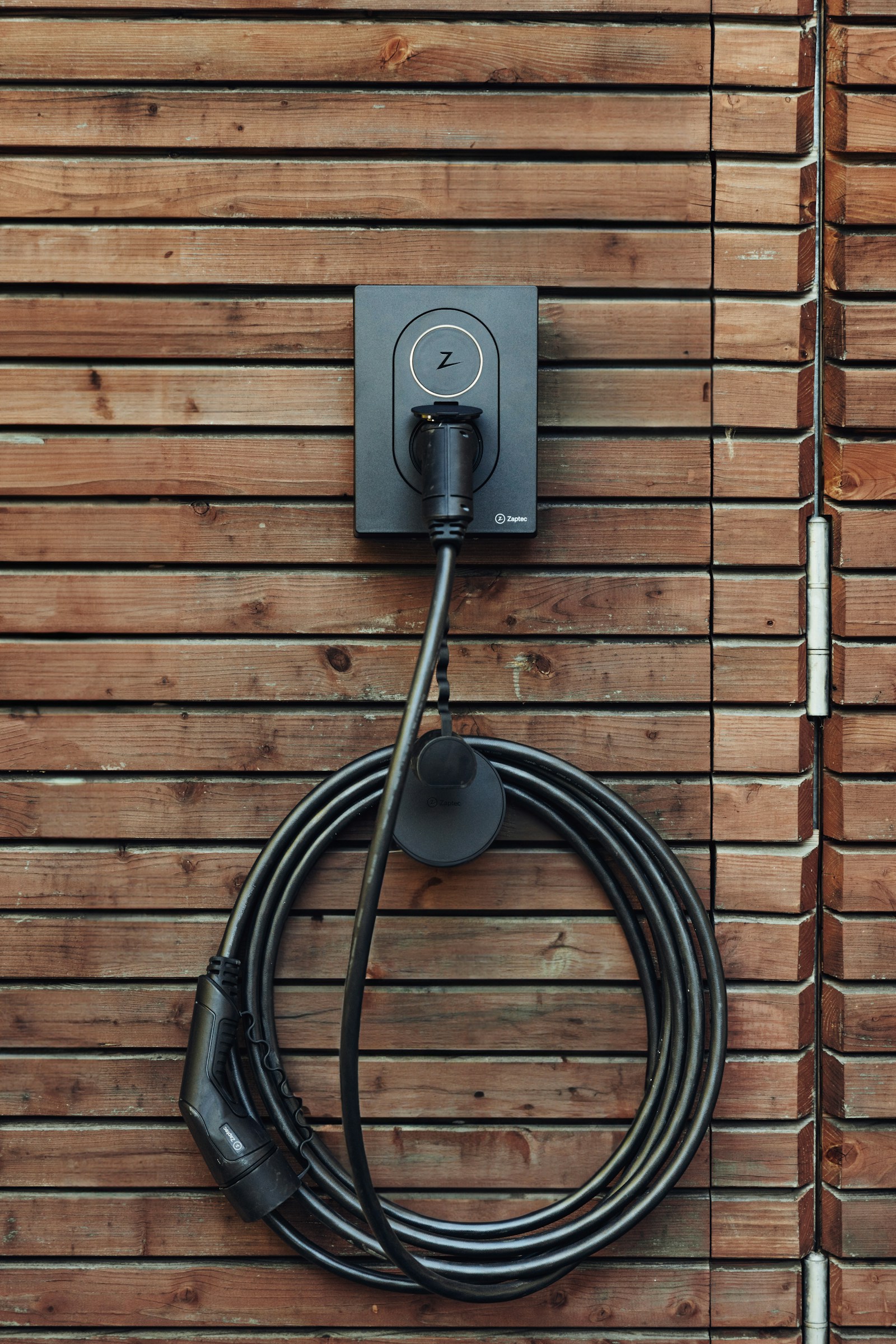
Most home EV charger installs are simple, and you deserve one honest number before anyone starts. Here is the real range for around here, and the one thing that moves it. The quote is the price. You approve the number first and never pay for work you didn't sign off on.
You want to charge in your own garage and wake up to a full battery. The worry is not the charger. It is the bill that changes halfway through.
A charger quote starts simple. Then the electrician opens the panel, finds it cramped or full, and the number jumps. That is where the sticker shock hits, and it is the part nobody warns you about before they show up.
Here is how you keep that from happening to you. We look at your panel and the wire run first, and we give you one honest all-in number, charger, labor, materials, permit, and any panel work, before we start. If your panel needs an upgrade, you find out up front, not partway through the job with the wall already open. That is the whole point of the number on this page. You should be able to see the real range before anyone comes out.
Realistic 2026 all-in ranges for the Cheektowaga and Buffalo market. Charger, labor, materials, permit, and inspection. Where your job lands depends on the factors below the table.
| Your situation | What is involved | Typical WNY cost |
|---|---|---|
| Straightforward install | Attached garage, a new dedicated 40 to 60A circuit, charger hardwired or on a NEMA 14-50 outlet, with a moderate wire run. Permit and inspection included. | $1,200 to $3,000estimate |
| Tesla Wall Connector | A Tesla Wall Connector specifically, installed on a properly sized dedicated circuit | $1,400 to $3,200estimate |
| Panel work or a long run | The panel needs work before the charger, a subpanel or load manager is added, or the feed runs a long way or trenches out to a detached garage | up to $4,000+estimate |
The short version. If your panel has room and your garage is attached, an EV charger is one of the cheaper electrical jobs you will pay for. The cost only climbs when the wire has a long way to travel, or when an older panel cannot take a modern load. Both are fixable, and both are worth knowing about before you sign anything.
Two similar houses on the same Cheektowaga street can land quotes hundreds of dollars apart. It comes down to these, and you deserve to hear all of them before a number is quoted.
This is the single biggest driver. The farther the charger sits from your panel, the more heavy copper wire the run needs, and a 60 amp circuit uses thick, expensive cable. A charger mounted beside the panel is cheap. One on the far side of the garage, or fished through a finished wall, costs more in wire and labor.
Biggest leverA Level 2 charger needs a free 240 volt slot and enough spare capacity. Most modern 200 amp panels have both, and need no upgrade. If your panel is physically full, a load management device can share capacity for far less than a new service. If you are on an old 60 amp or tight 100 amp service, that is when a full upgrade enters the picture.
Where people get oversoldHardwired or plug-in on a NEMA 14-50, indoor or outdoor, and which unit you pick all move the number. An outdoor or detached-garage install needs weatherproof, outdoor-rated equipment, which adds cost. Trenching underground to a detached garage is the pricey one. If you have not bought a charger yet, we help you match one to your car and panel so you do not over-buy.
Indoor is cheaperA hardwired 240 volt circuit is a new circuit, so the Town of Cheektowaga requires a permit and a third party electrical inspection. That is a real line on the estimate, and it is the part cheap installs skip. Skipping it is how a bargain job turns into an insurance or resale problem later. We pull the permit and handle the inspection so it is on record and to code.
Included, not skippedBefore you spend a dollar, it is worth being honest about whether you need a hardwired charger at all. Here is the real trade-off for a Western New York homeowner.
| Level 1 (120V wall outlet) | Level 2 (240V dedicated circuit) | |
|---|---|---|
| Range added per hour | About 3 to 5 miles | About 20 to 40 miles |
| Full charge time | A full day or more | Overnight |
| What it needs | Any standard outlet you already have | A new 40 to 60A dedicated circuit |
| Install cost | Essentially free, you just plug in | About $1,200 to $3,000 in WNY |
| Best for | Low daily miles, a plug-in hybrid, a second car | Daily driving, one full battery EV, cold-weather range loss |
If you drive 20 to 30 miles a day and can plug in every night, a Level 1 cord might genuinely be enough, and we will tell you that instead of selling you a job you do not need. For most drivers here with a full battery-electric car, Level 2 is the difference between waking up full and waking up short. It matters more in winter. Cold weather cuts EV range, so faster overnight charging keeps you from starting a snowy morning low on miles.
This is the question that decides whether your install is $1,200 or over $4,000. In an older town like this one, it comes up more than you would think.
Most homes around here were built in the postwar decades, and a lot of them still run the electrical service they were built with. A 60 amp fuse box or an early 100 amp panel was plenty for a mid-century house. A few lamps, a radio, a fridge. It was never designed to hand a car in the garage 40 or more amps of continuous load. That is why the panel is the real question behind an EV charger, not the charger itself.
Here is the honest breakdown of what you are likely looking at.
You do not have to figure out which one you have. A load calc tells us for sure, and we do that check for free before we quote anything.
When an older home needs a service upgrade to run a charger, that same upgrade fixes the breakers that pop when the microwave and the AC run together. Doing both as one job beats paying twice, and it is exactly the kind of scope we lock in writing up front. See the real numbers on our panel upgrade cost guide, or what a 200 amp service upgrade involves.
Real levers that lower an EV charger install cost in Western New York. Not gimmicks.
New York does not offer a state rebate for a residential Level 2 home charger install. The state and utility make-ready programs are for workplaces, apartment buildings, and public charging, not single-family homes. If you are a National Grid customer, the one perk you can still use is National Grid's off-peak program, Charge Smart NY. You charge overnight, between 11 p.m. and 7 a.m., and National Grid pays you a bill credit for it, up to about $300 a year. That is National Grid's program, not ours. We install the charger and the circuit, and you enroll with National Grid. It does not lower what the install costs. It lowers what you pay to charge. Confirm the current terms with National Grid, since these programs change.
The one install incentive was the federal home EV charger tax credit, worth 30 percent of the install cost. It only covered chargers placed in service on or before June 30, 2026, and it has expired. Even while it was active it applied only to homes in qualifying census tracts, so most homeowners here never qualified for it anyway. Incentive rules change often, so confirm your own eligibility with a qualified tax professional. We will not quote you a rebate we cannot back up.
A charger install is not just bolting a box to the wall. Here is how a permitted, to-code job runs in the Town of Cheektowaga. The part the cheap guys skip.
We look at your panel capacity, the run distance, and your garage. You get one exact, locked-in price, including whether you need a panel upgrade or just a load manager.
We pull the electrical permit from the Town of Cheektowaga Building Department. A new 240 volt circuit legally requires it, and it protects your homeowner's insurance.
A dedicated 40 to 60A circuit, the correct wire gauge, the proper breaker, and the charger mounted and terminated to the code New York now uses.
A New York State approved inspection agency inspects the work and issues the certificate. You get a charger that is on record, to code, and will not bite you at resale.
Most straightforward Level 2 installs are done in a half day. The only time it stretches longer is when the job also needs a service upgrade. Then the utility has to disconnect and reconnect your meter, and it will not energize a new service until it has the inspection certificate in hand. If that applies to you, we coordinate the whole sequence so you are not chasing the utility yourself.
The quote we give you is the price you pay. You approve the number first, and you never pay for work you didn't sign off on. If we run into something inside the wall, we stop and check with you before going further. No surprise bills on your EV charger job.
Most Level 2 home EV charger installs in Cheektowaga and Western New York run about $1,200 to $3,000 all in, including the charger, labor, materials, permit, and inspection. A simple job, meaning an attached garage, the charger near the panel, and a spare 240 volt slot, sits at the low end. A long wire run, a detached garage, or a panel that needs work can push it to $4,000 or more.
This is an estimate, not a quote. Your exact price is locked in writing before any work starts. The quote is the price.
Usually no. Most modern 200 amp panels are ready for a Level 2 charger with no upgrade. Older, 100 amp, or full panels may need a load calculation, and sometimes a load management device that shares capacity can avoid a full upgrade and save you $1,500 to $3,000.
The exception is older homes still on a 60 amp or tight 100 amp service, common in Depew, Sloan, and the older parts of town. Those may genuinely need a service upgrade first, which also fixes the tripping breakers you are probably already dealing with. A load calc tells us for sure, and we do that check for free.
Level 1 plugs into a standard 120 volt outlet and adds roughly 3 to 5 miles of range per hour. A full charge can take a day or more. It is essentially free to set up.
Level 2 uses a dedicated 240 volt circuit and adds about 20 to 40 miles of range per hour, so you charge fully overnight. That is the install priced on this page. For daily driving with one full battery EV, especially through a winter that cuts range, Level 2 is what most homeowners want.
A Tesla Wall Connector runs about $1,400 to $3,200 installed in Western New York, depending on how far it sits from your panel and whether the panel has a free 240 volt slot.
We install a Tesla Wall Connector, a universal J1772 or NACS charger, or a hardwired unit you already bought, all on a properly sized dedicated circuit. What matters for safety and code is the circuit, breaker, and wire gauge behind the unit, and that it passes third-party inspection. If you have not bought a charger yet, we will help you match one to your car and your panel.
No. The federal home EV charger tax credit, worth 30 percent of the install cost, only covered chargers placed in service on or before June 30, 2026, and it has expired. Even before then, it applied only to homes in qualifying census tracts, so most homeowners here never qualified.
There is no New York State home charger install rebate. The state and utility make-ready programs cover workplaces, apartment buildings, and public charging only. Existing National Grid customers can use an off-peak charging bill credit, but that lowers your charging cost, not the install. Confirm your eligibility with a tax professional, and be wary of any installer promising a rebate that does not exist.
Yes. A hardwired Level 2 circuit is a new circuit, so it requires an electrical permit from the Town of Cheektowaga Building Department and a third-party electrical inspection by a New York State approved inspection agency.
We pull the permit and coordinate the inspection for you. An unpermitted install can create a headache with your homeowner's insurance and at resale. It is not worth the shortcut.
An EV charger is often the first job that reveals an older home's real electrical picture. Here is where to look next.
Tell us about your garage and panel. We will reach out fast with one honest, locked-in price. No surprise upsells, no pressure.