Knob-and-tube can run for years without a problem. What forces most homeowners to act is a carrier that will not renew the policy, or a buyer who cannot get one. Replacing the old wiring clears both, and it removes a real fire risk at the same time.
This page explains what old wiring is, why insurers flag it, what a rewire costs in Western New York, and how we keep you living in the house while it gets done. Prices are estimates, not a quote. Your exact price is locked in writing before any work begins.
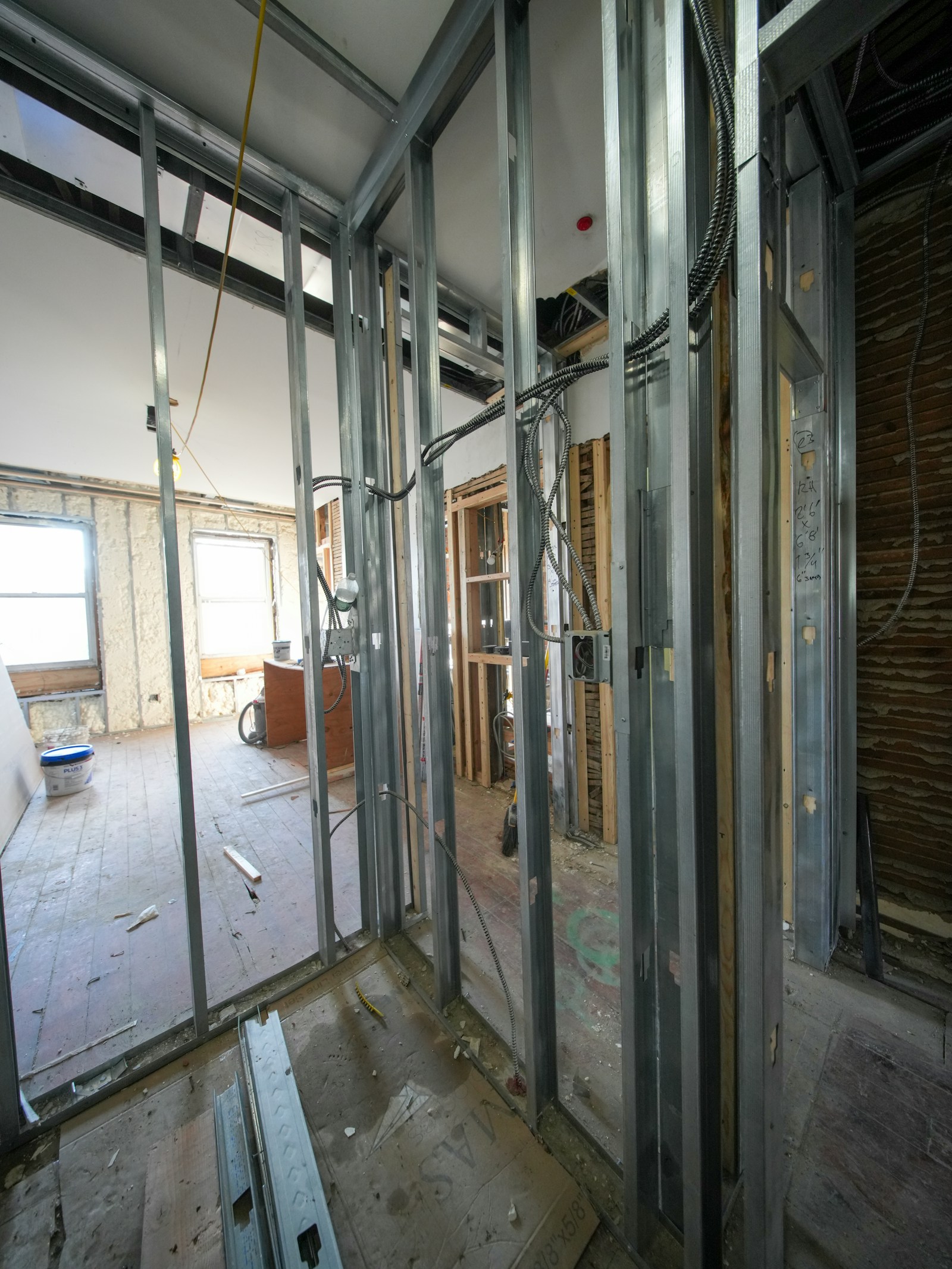
If your home is one of the older ones around here, there is a real chance the wiring behind your walls is older than anyone living in the house. A lot of Cheektowaga was built in the postwar decades, and the oldest of those homes were wired with knob-and-tube: single cloth-covered wires strung through porcelain knobs and tubes, with no ground. It may look harmless, and undisturbed it can run for years. The trouble starts when it ages, when someone buries it under insulation, or when your insurance company decides it will not cover a house that still has it.
We are licensed electricians working in Cheektowaga and the Buffalo suburbs, and we open up a lot of old attics. This page is the plain version of what we would tell you standing in yours. What you likely have, why your insurer suddenly cares, what a rewire really costs here, and whether you have to leave your home while it happens. No scare tactics, no filler. Then a straight offer to come look.
What is actually in your walls
Older homes here usually have one of three kinds of wiring that get flagged. Knowing which one you have changes everything, and you do not have to figure it out yourself. Here is the plain version of each.
Knob-and-tube
- Single cloth-covered wires run separately, not bundled in a cable.
- White porcelain knobs and tubes hold the wires off the framing.
- No ground wire, so no ground on your outlets.
- Insulation gets brittle and cracks as it ages.
Aluminum branch wiring
- Silver-colored strands instead of copper.
- Often marked AL or ALUMINUM on the cable jacket.
- Loosens at connections over time as it expands and contracts.
- Sometimes fixable at the connections, sometimes a rewire.
The third one is old cloth-jacketed cable, an early bundled wire whose fabric and rubber insulation dries out and flakes off the copper inside, especially near the hot panel and light fixtures. Whichever of these you have, the concern is the same: the insulation that is supposed to keep the wires safe is past its life, and on knob-and-tube there is no ground to protect you in the first place.
Why knob-and-tube is a fire risk
Knob-and-tube was fine for the home it was built for, a few lights and an outlet or two. Three things turn it into a hazard now. First, the cloth and rubber insulation gets brittle and cracks with age, which exposes bare conductor. Second, it was designed to shed heat into open air, so when someone lays attic insulation over it, the heat has nowhere to go and the wire can run hot. Third, there is no ground, so a fault that a modern system would carry safely to ground has no safe path. Add decades of modern appliances and homeowner splices, and you have a system doing a job it was never built to do.
What this means for you. The risk is not that your wiring will definitely fail tomorrow. It is that the protection you are counting on, intact insulation and a ground path, is worn out or was never there. A rewire replaces all of it with modern grounded copper cable, which removes the hazard and, just as important to most owners, clears the insurance flag. That is the whole reason this job exists.
Not sure what you have up there?
Send us your details and we will walk the attic and basement, tell you exactly what wiring is in your home, and whether it needs to go. No charge, no pressure.
The insurance problem, and why it has a deadline
This is the reason most people find this page. Your insurance company sent a letter, an inspector flagged the wiring, or you are buying or selling a home and it came up. Here is what is going on.
Insurers treat active knob-and-tube as a fire risk, and a lot of them will not cover a home that still has it. Some carriers decline these homes outright. Others will write or renew the policy but charge 50 to 100 percent more per year to carry the risk, and some require the wiring to be removed within a set window as a condition of keeping you. Like a failing panel, the insurer treats this as homeowner maintenance, which means they will not pay for the rewire. The cost is yours even though the insurer is the reason you need it.
What makes it urgent instead of just annoying is that non-renewal notices come with a date. If you let it pass without the work done, you can lose coverage, and if you have a mortgage, a lapse in coverage is a problem with your lender too. The good news is that the fix is clean. Once the old wiring is out and the job passes inspection, a modern grounded system is exactly what the carrier wants to see, and we write up the documentation so you have proof to send back.
If you have a non-renewal or binding letter, tell us the date. We move fast on these because a deadline is a deadline, and a rewire takes some scheduling. We would rather work back from your date than have you lose coverage over wiring we can replace.
If you are buying or selling a home
Old wiring is one of the most common findings in a home inspection, and knob-and-tube is a named deal-breaker. The reason is simple. The buyer usually cannot get a homeowners policy or a mortgage on a home with active knob-and-tube, so the deal stalls until the wiring is dealt with. Many purchase agreements end up requiring it to be removed, commonly within about 30 days of closing, which turns a calm project into a scramble against the clock.
If you are the seller, doing the rewire before you list beats a panicked price credit at the closing table, and it takes a scary line item off the inspection report before a buyer ever sees it. If you are the buyer, you want a real number for the work before you sign, not a guess. Either way, we give you a written scope and a locked price you can hand to your agent or your attorney. If you have an accepted offer with an inspection deadline, tell us the date and we will work back from it.
What a rewire costs in Cheektowaga & Buffalo
Straight answer first. A whole-house rewire in the Cheektowaga and Buffalo area commonly runs about $12,000 to $36,000, which works out to roughly $8 to $17 per square foot. A smaller home, or a partial rewire that only replaces the old circuits, runs less. Homes with plaster-and-lath walls instead of drywall run higher, because the walls are harder to open and patch. These are estimates for typical Western New York homes, not a quote.
| Scope of the job | Typical WNY range | What it covers |
|---|---|---|
| Whole-house rewire (knob-and-tube or old wiring removed) | $12,000 to $36,000 | Replace the old wiring throughout with modern grounded copper cable, new outlets, switches, and grounding. Roughly $8 to $17 per square foot. |
| Small home or partial rewire | $5,000 to $15,000 | A smaller house, or replacing only the old knob-and-tube or problem circuits rather than the entire home. Priced to the actual scope. |
| Plaster-and-lath access premium | add 25% to 30% | Older homes with plaster walls instead of drywall. More labor to open, fish, and patch, so it runs above the drywall range. |
| Town permit + electrical inspection | included | The permit and the third-party inspection are part of the quoted price, not an extra at the end. |
Why the wide range? Because a rewire is priced by the house, not by a flat fee. Square footage, the number of circuits and fixtures, how easy it is to get behind the walls, and whether you have drywall or plaster all move the number. That is also why we price it per opening once we walk the home, so you can see what each room costs instead of one lump figure you have to trust. We will tell you honestly whether your home needs a full rewire or only the old circuits pulled, and we will not sell you the whole house when a section is the real problem.
Why is my quote higher than the number I saw online? National cost guides average in newer homes and cheaper labor markets. Western New York labor runs higher, and our older housing stock, plaster walls, balloon framing, and tight attics, is harder to work in than a modern build. That is real work, not padding. We would rather show you the honest range than lowball you and surprise you later.
If the rewire turns up an old panel while we are in there, that is common, and the two jobs often travel together. Many of these homes still run on 60 or 100-amp service that needs to come up to a modern 200 amps, and some have a Federal Pacific or Zinsco panel that an insurer flags for the same reasons as the wiring. Whatever the number turns out to be, it is locked in writing before we touch a wire under the Price-Lock Guarantee.
Price-Lock Guarantee
The quote we give you is the price you pay. Not a penny more. No surprises once the walls are open. If we find something that changes the scope, a bad panel, buried junctions, more knob-and-tube than we could see, we stop and talk to you first and you decide before we proceed. You are never on the hook for work you did not approve.
Do I have to move out, and who patches my walls?
This is the question homeowners ask us the moment the price stops being the worry. The honest answer is reassuring. In most homes you can keep living there through the rewire. Here is what to actually expect.
- You usually stay in the home. A whole-house rewire generally takes about one to three weeks, and we work room by room so most of the house keeps power as we go. Power is shut off in sections, not for the whole job and not for weeks.
- Walls do get opened. Running new cable through a finished house means access holes, usually small and placed where they are easiest to patch. Attics, basements, and closets carry a lot of the runs, which keeps the openings in living rooms and bedrooms to a minimum.
- Plaster is messier than drywall. Older plaster-and-lath walls open and patch harder than drywall, so there is more dust and more repair. That is part of why plaster homes cost more, and we will tell you which walls it affects.
- You know the plan before we start. Before any wall is opened, we walk you through exactly what gets opened and who closes it back up, patching and paint included or coordinated, so nothing is a surprise.
The mess is the part people dread, so we name it up front. We would rather tell you on day one that a hallway ceiling has to open than have you find drywall dust on the couch and wonder what else is coming. You approve the plan before the first hole.
How a rewire actually goes in Cheektowaga
A rewire is a bigger job than a panel swap, but the sequence is straightforward, and it is exactly why hiring someone who does these in older homes beats a generalist. Here is the real order.
Walkthrough and locked quote
We walk the attic, basement, and rooms, find every run of old wiring, and give you one written price with the plan for what opens and who patches. We pull the electrical permit from the Town of Cheektowaga Building Department at 275 Alexander Avenue.
New wiring, room by room
We run modern grounded copper cable to replace the knob-and-tube or old wiring, add proper grounded outlets and switches, and keep power on in the sections we are not working in. Most rewires take about one to three weeks depending on the size of the home.
Inspection and documentation
A Town-approved inspection agency inspects the work and issues the Certificate of Electrical Inspection. We give you that paperwork for your insurer or your closing, so the coverage or the sale is clean.
A local note worth knowing. In Cheektowaga the permit comes from the Town Building Department, and the electrical inspection is done by an independent agency the Town approves, not by a Town employee. A permit number is issued before the inspection, and the inspector leaves a dated record and files the certificate. We handle the permit and the inspection scheduling so your part is simple: you approve the quote and the plan, and we sequence the rest.
A note on licensing. New York does not issue a statewide electrician license. Licensing is handled locally, and we are licensed and insured to do this work in the areas we serve. If you want to see proof of insurance before we start, just ask.
Related electrical services
A rewire rarely lives alone in an older home. Here is where Western New York homeowners go next.
Rewiring and knob-and-tube questions
Is knob-and-tube wiring dangerous?
It can be. Knob-and-tube has no ground wire, its cloth and rubber insulation gets brittle and cracks as it ages, and it was never meant to be buried under attic insulation, where it traps heat and can overheat with no warning.
Undisturbed and in good shape it may run fine for years, but modern loads, old repairs, and blown-in insulation are what turn it into a fire risk. We can look at yours and tell you straight whether it needs to come out or it is fine to leave.
Will my insurance drop me for knob-and-tube wiring?
A lot of carriers will not write or renew a homeowners policy on a house with active knob-and-tube wiring, and the ones that will often charge 50 to 100 percent more per year. Insurers treat the removal as homeowner maintenance, so the cost is yours.
If you have a non-renewal letter, treat the date on it as a deadline and get a quote fast. Once the old wiring is out and the work is inspected, the carrier gets the documentation it needs to keep or write the policy.
How much does it cost to rewire a house in the Buffalo area?
A whole-house rewire in Western New York commonly runs about $12,000 to $36,000, which works out to roughly $8 to $17 per square foot. A small home or a partial rewire of just the old circuits runs less, often around $5,000 to $15,000. Homes with plaster-and-lath walls run about 25 to 30 percent more because the walls are harder to open and patch.
These are estimates for typical Western New York homes, not a quote. Your exact price is locked in writing before any work starts under the Price-Lock Guarantee.
Can I stay in my house during a rewire?
Usually yes. A whole-house rewire generally takes about one to three weeks, and we work through it room by room so most of the house keeps power as we go. The power is shut off in sections, not for the whole job.
Walls do get opened to run the new cable, and in older plaster homes that part is messier, so we tell you up front exactly what gets opened and who patches it before we start.
Do I have to replace knob-and-tube when I buy or sell a house?
Often, yes. Active knob-and-tube is a common home-inspection finding, and because the buyer frequently cannot get a homeowners policy or a mortgage on a home with it, many deals require the wiring to be removed, commonly within about 30 days of closing.
Doing it calmly before you list beats a rushed credit at the closing table. If you have an accepted offer with an inspection deadline, tell us the date and we will work back from it.
Is aluminum wiring the same problem as knob-and-tube?
It is a different problem with a similar bottom line. Aluminum branch wiring was common in homes wired from roughly the mid-1960s to the mid-1970s. It expands and loosens at connections over time, and the U.S. Consumer Product Safety Commission has reported that older aluminum branch wiring is far more likely to reach fire-hazard conditions at connections than copper.
Sometimes it can be corrected at the connections, and sometimes a rewire is the honest fix. We will tell you which one your home needs.
Do I need a permit and inspection to rewire my house in Cheektowaga?
Yes. A rewire requires an electrical permit from the Town of Cheektowaga Building Department at 275 Alexander Avenue, and the finished work must pass a third-party electrical inspection by a Town-approved agency.
The inspector issues the Certificate of Electrical Inspection, which is the document your insurance company and a buyer's attorney will want to see. We pull the permit and schedule the inspection for you.
Will you have to tear my walls apart to rewire?
Not tear apart. Rewiring an existing home means running new cable through walls, ceilings, and floors, so some access holes are needed, usually small and placed where they are easiest to patch. Attics, basements, and closets do a lot of the work.
In plaster homes there is more opening and patching than in drywall homes. Before we start, we walk you through exactly what gets opened and who closes it back up, so there are no surprises.